
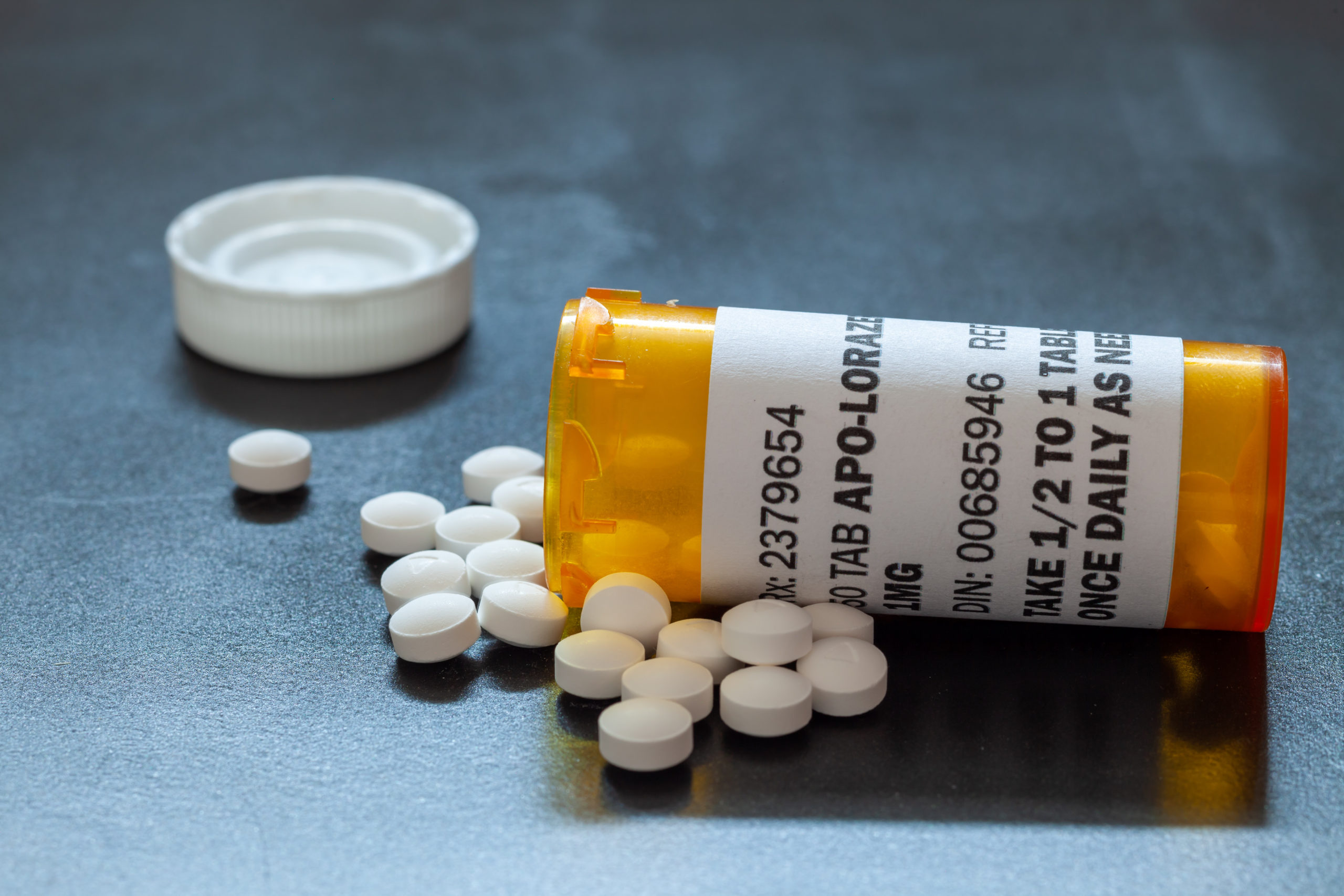
Lorazepam is a sedative that is prescribed to treat epilepsy and other seizure disorders. It is also used before medical procedures to reduce anxiety. However, many people use it for recreational purposes. If too much of the drug is taken, it can be quite dangerous. Read on to find out the signs of a lorazepam overdose and what you can do to get treatment if a lorazepam addiction forms.
What is Lorazepam?
Lorazepam belongs to the benzodiazepines drug class. This means it works on the central nervous system and brain to produce a calming effect. It does this by interacting with GABA, a neurotransmitter that blocks impulses between the nerve cells and the brain.
The drug is prescribed to treat anxiety disorders and seizures and provides short-term effects. However, many people take it recreationally, which is dangerous because it can be habit-forming. When taken in excess, it can produce symptoms such as paranoia, suicidal thoughts, lack of judgment, slow breathing, and death.
It is especially dangerous when mixed with alcohol.
Are Lorazepam and Xanax the Same Thing?
Lorazepam and Xanax both belong to the benzodiazepine family, and both treat anxiety. However, they come with their share of differences. Here are some to consider.
- Effects: Xanax works quicker but has a shorter duration than Lorazepam. Xanax’s effects will peak in 1-2 hours, whereas Lorazepam will take 2 hours to peak. However, Xanax will wear off in 4-6 hours, while Lorazepam lasts for 8 hours.
- Dosage: .5 mg of Xanax is equivalent to 1 mg of Lorazepam.
- Ethnicities and Biology: Xanax works differently on people depending on their race and health conditions. Lorazepam produces similar effects regardless.
- Treatments: Lorazepam is prescribed to treat seizures; Xanax is not.
Is Lorazepam Addictive?
Yes, Lorazepam is addictive. This is because it produces withdrawal symptoms.
Withdrawal symptoms come about when the body gets used to having a drug in its system. When it is without the drug, it becomes unable to function normally. It begins to produce withdrawal symptoms that include flu-like symptoms as well as hallucinations, difficulty with mental functions, and more.
In addition to withdrawal, a person addicted to Lorazepam may also exhibit the following symptoms:
- Drowsiness
- Impaired decision making
- Skin irritations and rashes
- Speech problems
- Mood swings
- Memory impairment
- Slowed reaction times
- Personality changes
- Depression
- Suicidal thoughts
- Irritability
- Slowed respiratory rate
- Needing to take more of the drug to get the same effects
- Financial issues
- Troubled relationships
- Withdrawal from society
- Lack of self-care
A Lorazepam addiction doesn’t take long to form, and it’s one of the many dangers associated with taking the drug.
What are the Signs of a Lorazepam Overdose?
If a person takes excessive amounts of Lorazepam, they may overdose. Here are some overdose symptoms to be aware of.
- Blurry vision
- Severely slowed breathing
- Unresponsiveness
- Involuntary eye movements
- Disorientation
- Increased anxiety and agitation
- Blurred vision
- Reduced muscle strength
- Decreased reaction time
- Dramatically lowered blood pressure
- Coma
- Death
If a person is showing signs of a Lorazepam overdose, it’s important to get them medical attention as soon as possible.
Finding Prescription Drug Treatment Programs Near Me
Lorazepam is far from the only prescription drug that’s likely to cause an addiction. There are many others that cause withdrawal symptoms and are dangerous if taken in excess. Fortunately, there are several clinics that offer lorazepam treatment along with therapies for other prescription drug dependency issues.
You can look all over to find the rehab facility that’s right for you, or you can save time by checking out Altitude Recovery Community first.
Altitude Recovery is a luxury inpatient facility located in the upscale community of Camarillo, CA. We offer a dual diagnosis approach focusing on both the addiction and its underlying cause. We provide customized, individualized treatments for our patients and follow up with aftercare planning.
We aim to make recovery as comfortable and convenient as possible. We provide ultra-luxury amenities and semi-private and private rooms. We offer travel assistance so patients can easily access the care they need. Drug addiction is not easy to overcome. Altitude offers an approach that sets us apart. Contact us to find out how we can help you make a smooth transition to the next part of your life.